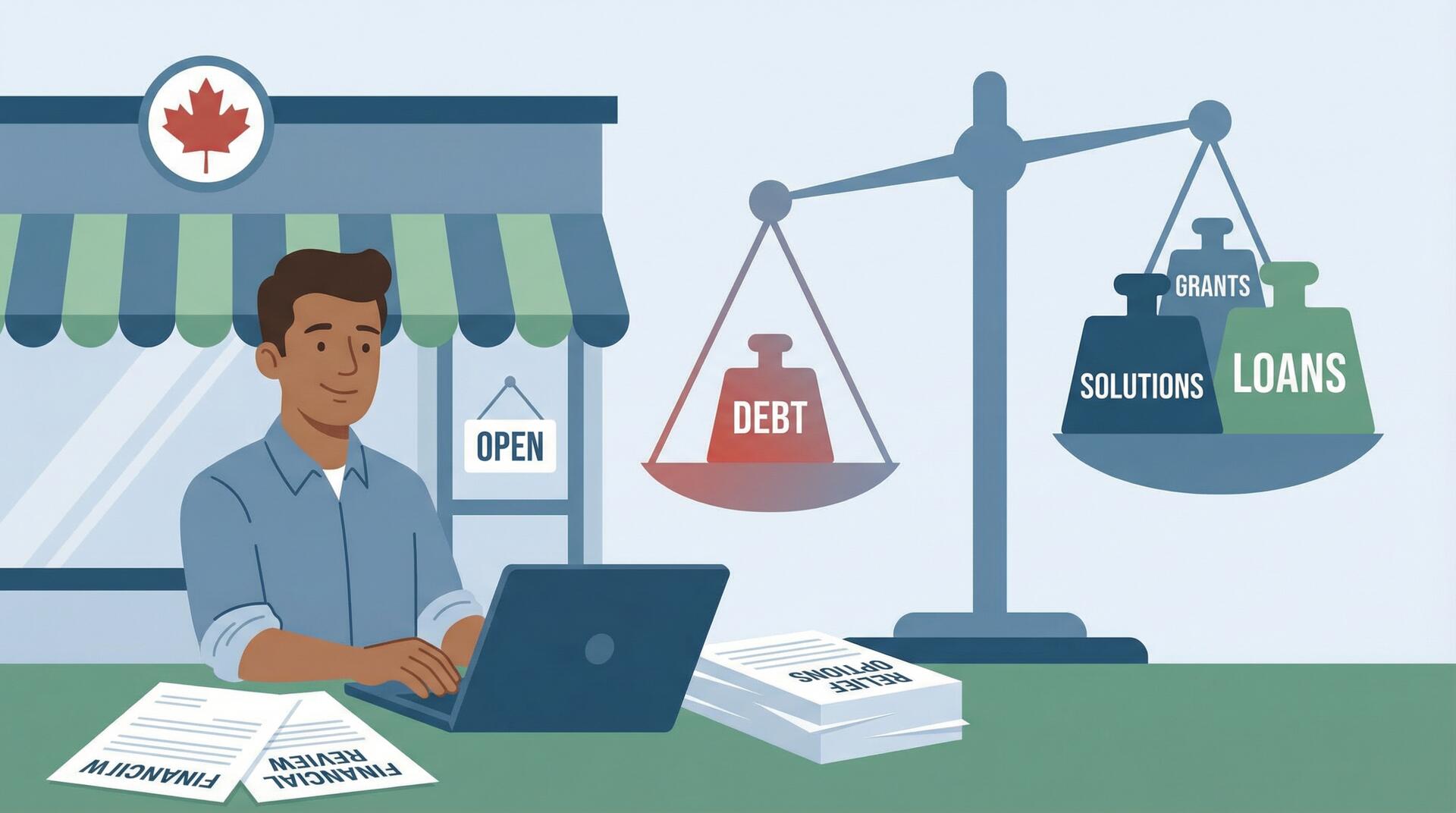
Running a small business with mounting debt? Discover specialized solutions for entrepreneurs, from business proposals to personal liability protection.
When Your Business Debt Becomes Personal
Small business owners face unique challenges when dealing with debt. Unlike employees, entrepreneurs often have personal guarantees on business loans, making the line between business and personal finances blurry. Understanding your options is critical.
The Small Business Debt Problem
Canadian small business owners often face:
- Personal guarantees on business loans and lines of credit
- Credit card debt used to finance operations
- CRA debt from unremitted payroll taxes or GST/HST
- Supplier debt and unpaid invoices
- Commercial lease obligations
When business revenue declines, these debts don't disappear—and personal guarantees mean you're personally liable.
Understanding Personal Guarantees
When you signed for business financing, you likely provided a personal guarantee. This means:
- If the business can't pay, you're personally responsible
- Creditors can pursue your personal assets (home, car, savings)
- Business bankruptcy doesn't eliminate your personal liability
Option 1: Business Proposal (Division I Proposal)
If your business owes more than $250,000, you may be eligible for a Division I Proposal. This is similar to a Consumer Proposal but for businesses.
How It Works:
- Negotiate with creditors to pay a percentage of business debts
- Business continues operating during the proposal
- Requires approval from creditors holding majority of debt
- Administered by a Licensed Insolvency Trustee
Best For:
- Viable businesses with temporary cash flow problems
- Businesses with valuable assets or contracts
- Situations where closing the business would destroy value
Option 2: Personal Consumer Proposal
If you've personally guaranteed business debts, you can file a personal Consumer Proposal to deal with those guarantees.
Advantages:
- Eliminates personal liability for business debts
- Protects your home and personal assets
- Stops creditor actions against you personally
- Allows the business to continue or close orderly
Example:
You own a restaurant that owes $80,000 on a business line of credit (personally guaranteed) plus $30,000 in personal credit cards used for business expenses. A Consumer Proposal could settle the entire $110,000 for $30,000 paid over 5 years, protecting your home and personal assets.
Option 3: Corporate Bankruptcy
If the business is no longer viable, corporate bankruptcy may be the cleanest option.
What Happens:
- Business ceases operations
- Assets are liquidated to pay creditors
- Corporation is dissolved
- Directors/owners may still be liable for certain debts
Debts That Survive Corporate Bankruptcy:
- Personally guaranteed loans
- Unremitted source deductions (payroll taxes)
- Unremitted GST/HST
- Director liability for unpaid wages (limited amount)
Option 4: Personal Bankruptcy
If you're personally liable for significant business debts and have few personal assets, personal bankruptcy may eliminate those obligations.
What Gets Eliminated:
- Personal guarantees on business loans
- Business credit cards in your name
- Supplier debts you personally guaranteed
What Doesn't Get Eliminated:
- CRA debts from fraud or willful non-remittance
- Court-ordered fines
- Some director liabilities
Special Consideration: CRA Debt
Business owners often accumulate CRA debt from:
- Unremitted payroll source deductions
- Unremitted GST/HST
- Corporate income tax
Director Liability:
As a director, you can be held personally liable for unremitted payroll taxes and GST/HST, even if the corporation goes bankrupt. A Consumer Proposal or personal bankruptcy can eliminate this director liability.
Protecting Your Personal Assets
If you're a business owner facing debt, your primary goal should be protecting your personal assets (home, savings, vehicles).
Steps to Take:
- Separate business and personal finances immediately
- Stop using personal credit for business expenses
- Consult with a Licensed Insolvency Trustee before creditors take legal action
- Consider a Consumer Proposal to protect personal assets while dealing with business guarantees
The Sole Proprietorship Problem
If you operate as a sole proprietor (not incorporated), there is no legal separation between business and personal debts. All business debts are personal debts.
Your Options:
- Consumer Proposal (if debt under $250,000)
- Division I Proposal (if debt over $250,000)
- Personal bankruptcy
When to Seek Help
Don't wait until creditors are taking legal action. Seek advice from a Licensed Insolvency Trustee if:
- You're using personal credit to keep the business afloat
- You've missed CRA remittances
- Suppliers are demanding payment before delivery
- You're considering closing the business
- Creditors are threatening legal action
The Emotional Toll
Business failure is emotionally devastating for entrepreneurs who've invested years of their lives and personal resources. Remember:
- Business failure doesn't define your worth
- Many successful entrepreneurs have failed businesses in their past
- Debt relief options exist to give you a fresh start
- Taking action is better than suffering in silence
Moving Forward
Whether you're trying to save your business or planning an orderly exit, professional advice is essential. A Licensed Insolvency Trustee can help you:
- Understand your personal liability
- Protect your personal assets
- Navigate CRA obligations
- Choose the right debt relief option
- Plan for your financial future
The sooner you seek help, the more options you'll have available.